
Guide
Choosing your balaclava
How a balaclava is actually worn in the mountains, what our construction draws from it, and why cotton.
Updated

Where the piece came from
We trek in the Pyrenees and in the Alps. The problem always showed up the same way. On the climb you are warm, often warm enough to wear nothing on your head, even at -5 °C. Then you stop, and the cold comes back within minutes. The head and the face take it first.
Four situations come round on every outing. The stop at a col or at the end of a stage, when the body drops back down in temperature. The face exposed outside the sleeping bag at night. Cold wind straight on, even when everything else is covered. And camp work, pitching the tent, cooking, sitting up, when you stop moving for hours.
None of those is a moment of effort. That observation decided the material, not the other way round.

A balaclava goes on and comes off
A balaclava is not a layer you keep on. It is a piece that comes and goes through the day, and anyone who walks knows it: on the climb you are warm, often warm enough to wear nothing even at -5 °C; you roll the headband up and it becomes a beanie; you fold the mask down as soon as you stop. That is what the rolling headband is for: one piece instead of a beanie and a neck gaiter, and nothing to dig out of the pack at the moment the cold arrives.
That back and forth is the real use, and it is what we set out to make easy. The headband rolls up without removing gloves or hood. The mask folds down in one movement. The piece follows the rhythm of the day instead of fighting it.
It is also why the advice you read everywhere, no cotton in the mountains, does not apply here. That advice is right, but it is about the layers you keep on while sweating: a base layer, a jumper kept on during the climb. A balaclava is not one of those.
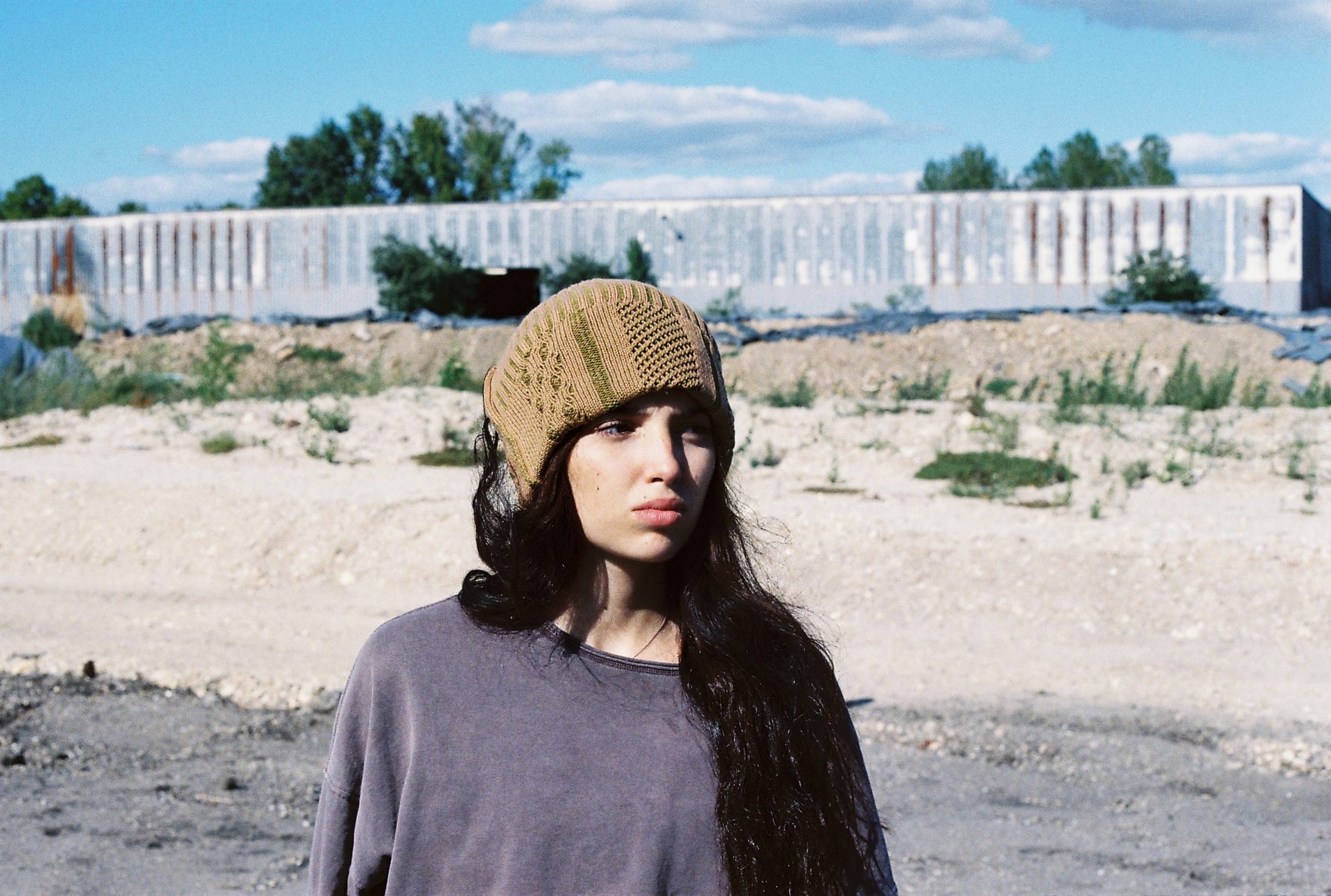
What the construction draws from it
Three of our balaclavas are knitted in double-thickness jacquard, gauge 5: Skadi, Frosthelm and Caledon. Two layers of knit caught in the same fabric, not a lining added afterwards. It is dense, it cuts the wind, and the pattern is built into the material rather than printed on it. Morrigan is single-thickness Aran knit, lighter, for less biting cold.
All four have an openwork zone over the mouth. It is the detail that matters most for the intended use: the breath passes through instead of condensing in the knit, and that is exactly the area you do not want to dampen when you stay still for hours.
The ribbed collar tightens on the neck and closes the draught at the nape. And the headband rolls up, taking the piece from full balaclava to beanie without removing anything, gloves or hood included.

| Situation | What the balaclava does |
|---|---|
| Stop at a col, end of a stage | Fold the mask down, the double thickness cuts the wind and the collar closes the nape |
| Cold wind head on | The mask protects the face, the most exposed and least coverable area |
| Night under canvas, face outside the bag | The openwork zone over the mouth lets the breath through instead of condensing it |
| Camp, cooking, sitting up | Cotton keeps a soft hand, you wear it for hours without thinking about it |
| Climbing, effort | Roll the headband up and it becomes a beanie, or take it off |
| Moderate cold, mid-season | Morrigan, single thickness, breathes more |
Why cotton, and not wool
Once the use is settled, the fibre choice turns on criteria other than sweat management. On a piece worn against the face, for hours at a time, those are the ones that decide.
Cotton comes from no animal. Moths ignore it, where a wool knit gets holed in a cupboard. It machine washes at 30 degrees with no special care, where a fine knit asks for consideration. It never holds the smell of wet wool. It resists abrasion better than a fine merino, which thins and pills. And it raises the irritation question for nobody.
On that last point, let us be precise rather than convenient: wool is not a skin allergen. Irritation comes from fibre diameter, above roughly 30 to 32 microns, and a superfine merino under 20 microns does not itch. So we did not choose cotton against a wool that would prickle. We chose it for the six reasons above, and above all for the seventh, the only one that can be measured.
| Criterion | Cotton | Merino | Fleece / acrylic |
|---|---|---|---|
| Animal fibre | No | Yes | No |
| Plastic in the knit | None | None | Yes, entirely |
| Microfibres in the wash | Biodegradable | Biodegradable | Not biodegradable |
| Moths | Not concerned | Vulnerable | Not concerned |
| Care | Machine, 30 °C | Delicate, sometimes by hand | Machine, pills quickly |
| Abrasion and lifespan | Holds well | Thins, pills | Pills, dulls |
| Skin irritation | Question never arises | Depends on fibre fineness | Question never arises |
| Cuts the wind | Yes in double thickness | Yes in dense knit | Variable |
Plastic, the one thing we can measure
Fleece is the material most sold on this kind of piece, and the one least talked about. It releases plastic microfibres every wash.
Fleece is a knit whose surface is brushed to raise a nap. That nap is made of short strands, and every wash pulls some out. Surface for surface, a fleece releases around eighty-five times more fibres than a smooth synthetic fabric of the windbreaker kind.
Cotton and wool shed microfibres too, in quantities of the same order. The difference is not the volume, it is what happens next: a cotton or wool fibre breaks down, a polyester fibre stays.
That is why we put no synthetic fibre in the knit, not even a few percent of elastane to help it spring back. It holds by its construction.
Let us be precise, because the nuance matters: the label sewn inside still contains plastic. We are looking to replace it. Until then we would rather write it down than claim a plastic-free product that would not be true. The aim is to use as little as possible, not to pretend there is none.

Size
All four balaclavas are one size. The knit stretches, and the pattern was adjusted over four prototype rounds, worn and reworked.
Measurements are given flat, laid down, without stretching. To place yourself, measure your head circumference with a tape, above the eyebrows and around the widest point at the back of the skull.

| Measurement | Value |
|---|---|
| Total height | 39 cm |
| Flat width | 25 cm |
| Eye opening | 18 cm |
| Ribbed collar | 11 cm |
Frequent questions
A balaclava, or a neck gaiter and a beanie?
The beanie plus neck gaiter pairing is the classic answer, and it works. A balaclava with a rolling headband does both in one piece: rolled up it is a beanie, folded down it closes the face and the neck. One object to carry, one to find in the pack, and no gap between the two for the wind to get into.
Does it fit under a ski or cycling helmet?
Yes. The knit stays fine enough to fit without bulk, and the headband can be rolled up to clear the ears if the helmet is tight. The ribbed collar tucks under a jacket collar.
Will it fog up my glasses?
The knit is openwork over the mouth: the breath passes through instead of being pushed upwards, which limits fogging. No balaclava removes it entirely, but that is exactly what this zone is for.
Is a cotton balaclava suited to the mountains?
Yes. A balaclava goes on and comes off through the day: you roll it up into a beanie on the climb, you fold the mask down as soon as you stop, at a col, at camp or in a sleeping bag. The generic advice, no cotton in the mountains, is about the layers you keep on while sweating, such as a base layer. A balaclava is not one of them.
When do you wear it, and when do you take it off?
You take it off, or roll it up into a beanie, during effort on the climb. You fold the mask down as soon as you stop: at a col, at the end of a stage, at camp, in the evening, at night. The headband rolls up without removing gloves or hood, which makes the beanie / balaclava switch immediate.
Does it keep you warm?
Three of the four are double-thickness jacquard, gauge 5: two layers of dense knit caught in the same fabric, which cut the wind. The ribbed collar closes the nape. The warmth of a balaclava comes from that construction before it comes from the fibre. Morrigan, in single-thickness Aran knit, is deliberately lighter.
Why the openwork over the mouth?
It is an openwork knit, and it is the most important detail for the intended use. The breath passes through instead of condensing in the fabric. When you stay still for hours, at camp or in a sleeping bag, that is precisely the area you do not want to dampen.
Cotton or merino?
For a layer you keep on while sweating, merino tolerates moisture better. On a balaclava, which comes and goes through the day and sits against the face, other criteria decide: no animal fibre, no moths, a machine wash with no special care, better resistance to abrasion, and no synthetic fibre in the knit.
Is there any plastic in it?
Not in the knit: one hundred percent Portuguese cotton, no elastane, no polyester, no acrylic. The label sewn inside still contains some, and we are looking to replace it. We aim for the minimum, not a plastic-free claim that would not be true. The gap shows most against a fleece, which releases around eighty-five times more microfibres in the wash than a smooth synthetic fabric, and those fibres do not break down.
Has the material been tested?
Yes, and it can be checked. Our balaclavas are knitted in a workshop certified to OEKO-TEX® STANDARD 100, certificate no. 6299CIT issued by CITEVE. The certificate covers product class I: the strictest of the four, the one for articles used by babies under three. That is the lowest threshold in the standard for harmful substances. For a piece that spends hours against the face, mouth and nose, it is the criterion that matters most.
Is there a warm balaclava with no wool in it?
This one. Double-thickness jacquard, Portuguese cotton, no animal material. Warmth comes mostly from the construction: two layers of knit hold air, one layer much less. What sells as a warm balaclava is nearly always wool, merino or acrylic. Rule out all three and there isn't much left.
Is this balaclava vegan?
The knit is: no animal material. The label sewn inside still contains polyester, which we are working to replace. Not animal, but it stops us saying the piece is entirely natural.
How do you wash it?
Cold, 30 °C maximum, delicate cycle or by hand. Turn the piece inside out to limit pilling. No tumble drying, heat shrinks cotton. Dry flat, away from sunlight.