

Skadi is no gentle goddess. In the Norse tales, she arrives with skis, mountains, the hunt, a kind of cold that asks no permission. She's often presented as a giantess, daughter of Thjazi, come to the gods to demand redress after her father's death.
The episode is strange, as often in the myths of the North. The gods offer her compensation. She must choose a husband seeing only his feet. She thinks she recognises Baldr, the fair one, and actually chooses Njord, bound to the sea. The marriage holds badly. He loves gulls and the shore; she prefers wolves in the mountains.

The texts say almost nothing about her clothes. They show her on skis, bow in hand, and leave the rest to the illustrators. To know how people really faced the cold in the North of that time, you have to leave the myth and look at what the ground has kept.

In 1936, at Skjoldehamn, on the island of Andøya in northern Norway, a peat bog gave up an 11th-century grave with an almost complete outfit, trousers included. The most striking piece is a hood: a few squares of wool twill sewn together, with a wide cape that falls to a point on the chest. It is one of the oldest examples of the hood that would later cover the whole of medieval Europe.
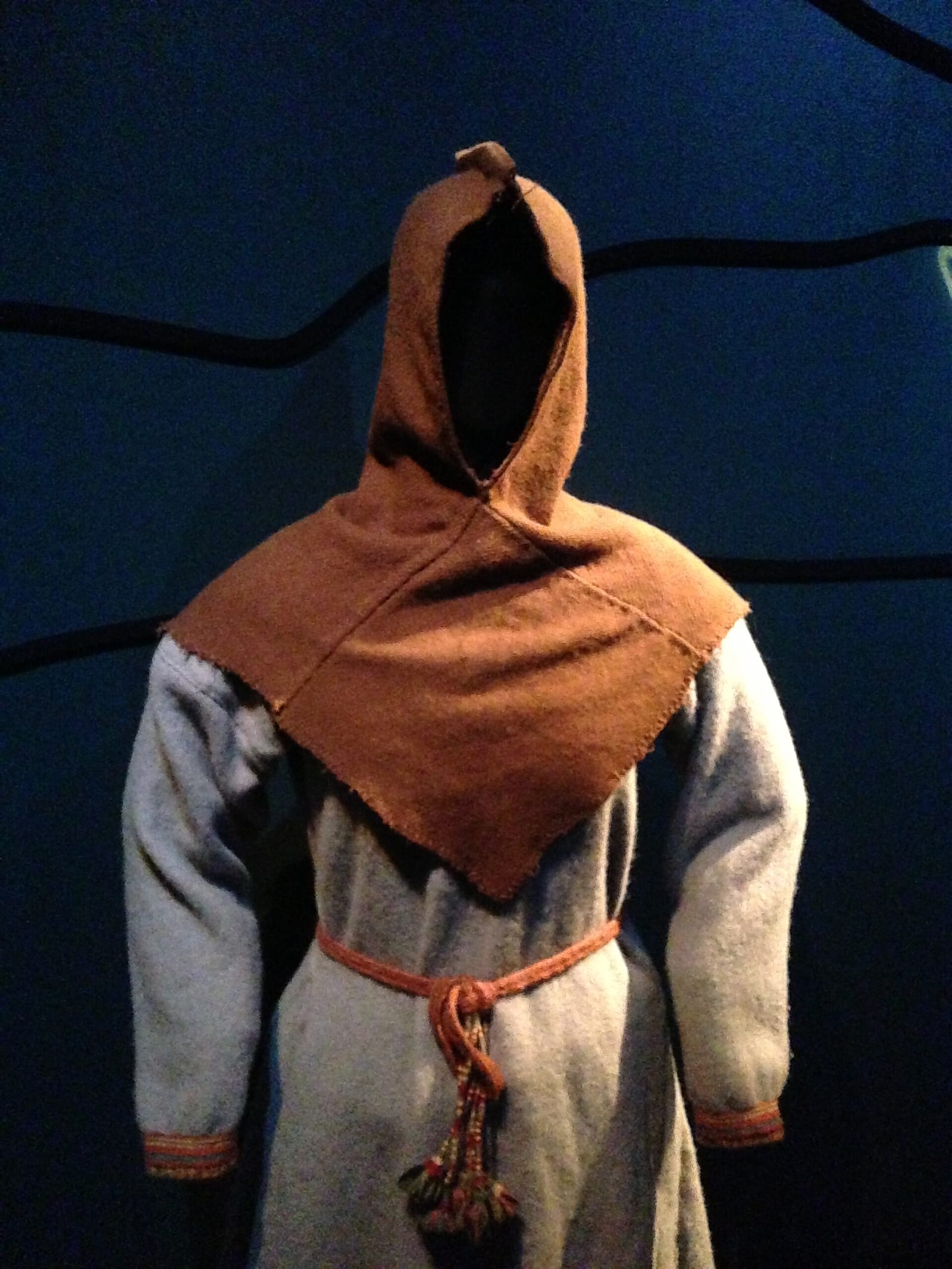
At that time, nobody in Scandinavia knits yet. Mittens, caps and socks are made in nålebinding, a single short needle that draws the yarn through loop after loop. Warmth is built in layers: a wool tunic, a hood, well-covered hands and feet. Nothing spectacular, just wool put to good use.

Folkovar gave the name to a balaclava, a distant cousin of that hood: a piece that covers the head, the neck and the lower face without erasing the gaze. The name only gives a direction: mountain, restraint, sharpness, old cold.

The motif stays Nordic too. It comes from the Selbu rose, an 8-pointed star knitted in Trøndelag, far more than from a Slavic symbolism or a generalised solar wheel. Precision avoids the big blur. A story often gains from knowing where it speaks from.
So the balaclava that bears her name can stay contemporary: Portuguese cotton, knitted in the Ave valley, pre-order, everyday use. It keeps a line from the North without imitating an archaeological object. That's exactly Folkovar's work: not to replay the past, but to keep the object from being empty.